01
The Character
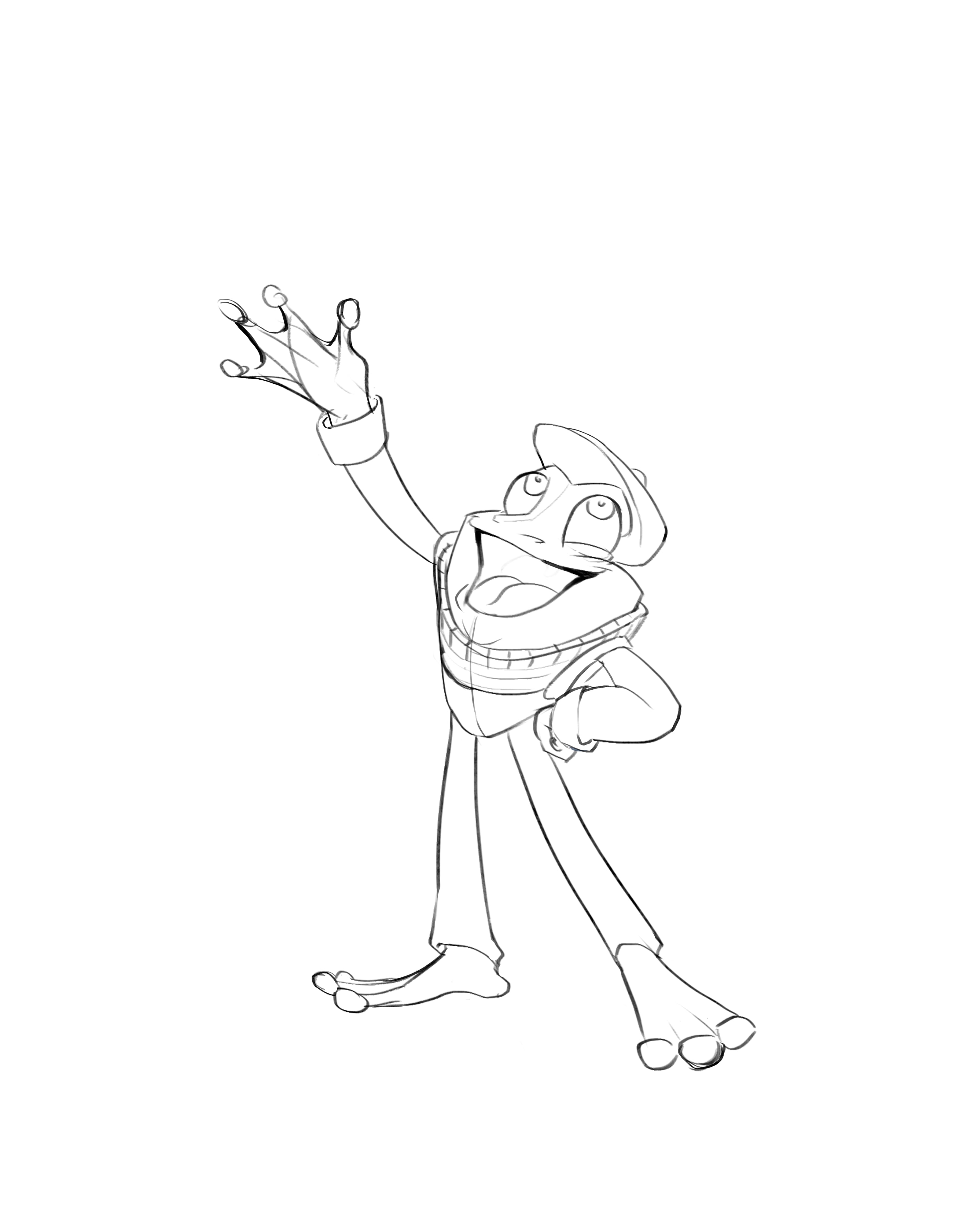
Tog had to feel small, kind, and alive. The early sketches searched for his posture, his reach, and the little gestures that made him feel like someone you could meet.

A look into how Tog came to life.

Not a perfect word. Not a word grownups even use. But it meant exactly what it needed to mean.
A little girl was learning the names of animals. Cow. Duck. Dog. Frog.
Only frog did not come out as frog.
It came out as Tog.
And somehow, Tog was right.
Instead of correcting her, I started to wonder if words were the only things that come out a little differently than we intend.
Maybe feelings do too. Dreams. Fears. Frustrations. The things we mean to say, and the things that come out instead.
A child might be scared and sound angry. A grown-up might be worried and sound impatient. Someone might say, “I'm fine,” because they do not yet know the name of what they feel.
Around our house, frogs became very good listeners.
Whenever a frog says ribbit, it means:
I am listening closely.
So we began to practice. Get low like a frog. Look at the person who is speaking. Say ribbit.
It became a small way to say: I hear you. I want to be heard. I am trying.
At first, Tog was just a name for a frog.
Then he became a way to listen. A way to be heard.
But listening needed a place. Feelings need room to be explored, so the pond began to take shape.
A worry.
A question.
A feeling without a name.
A story not ready to be told all at once.
The pond is not a place where feelings disappear.
It is a place where they can be noticed. Where they can sit for a while. Where they can become less tangled.
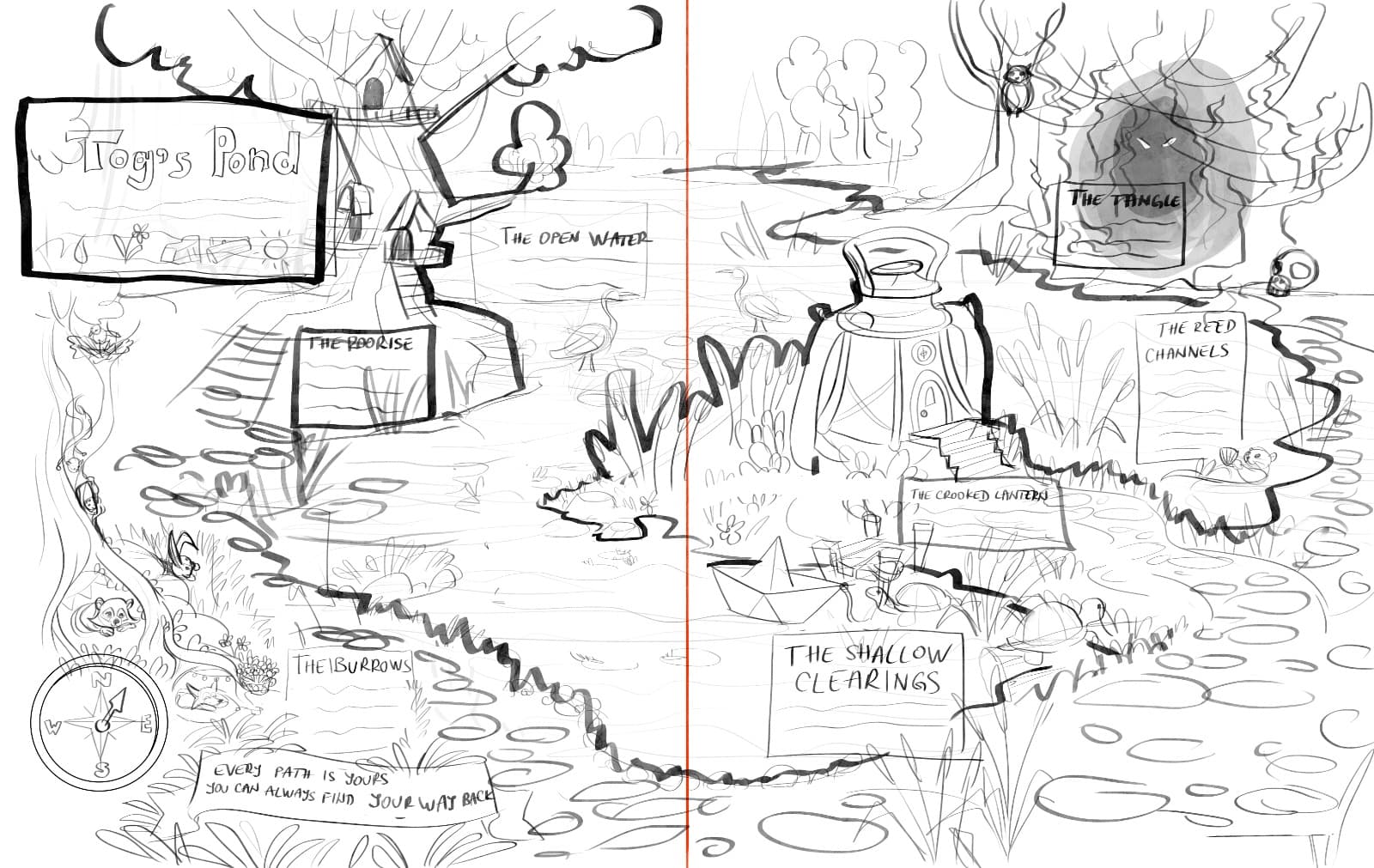
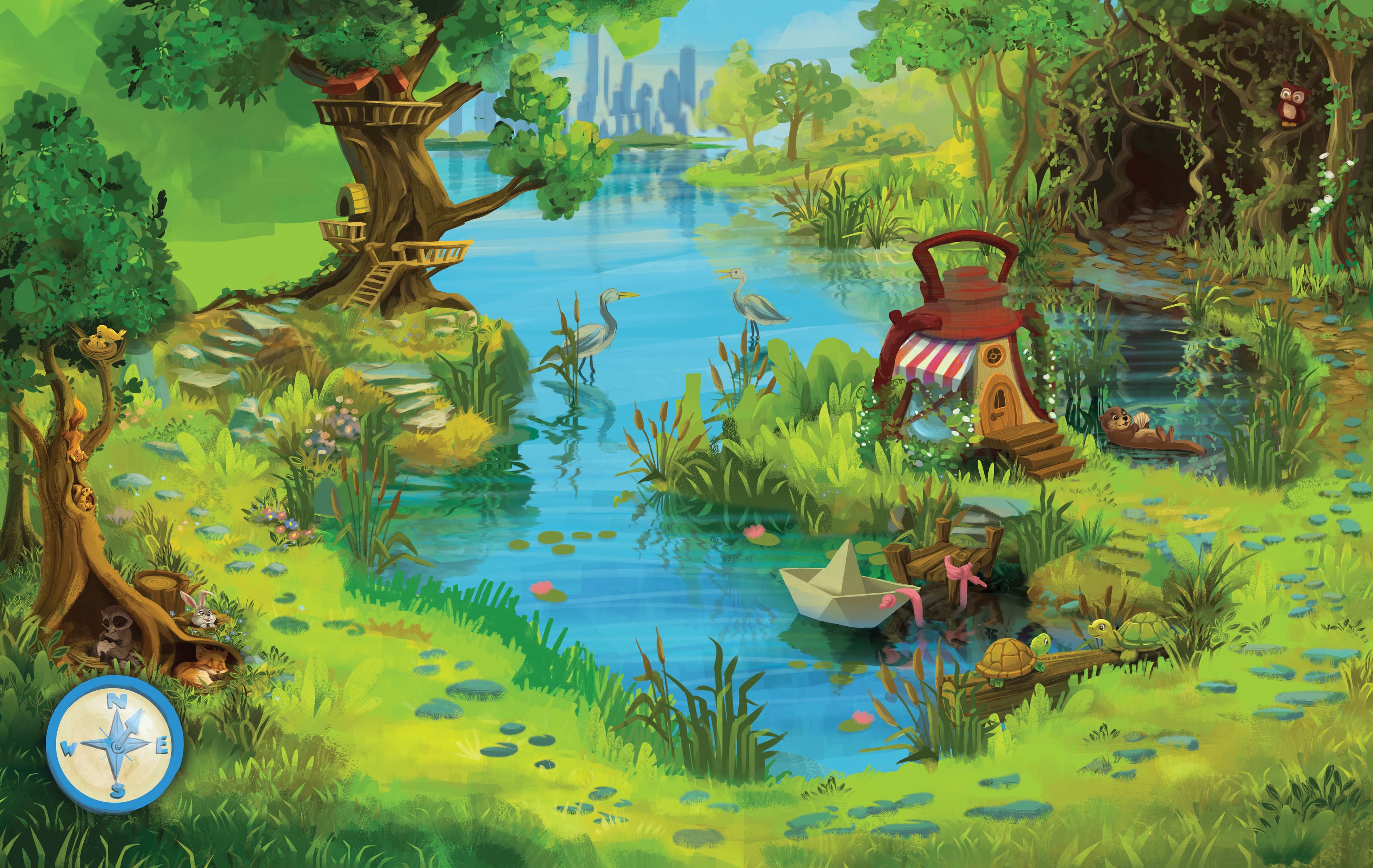
First a place was drawn. Then it became somewhere feelings could live.
Not because he has all the answers.
Because the pond gives feelings room, and Tog wants to remember what he has heard.
Some days he writes about a friend. Some days he writes about the water. Some days he writes down a feeling before he knows its name.
Every now and then, one of those journal entries grows into a story.
The first Tog book comes from the journals of Thaddeus Oliver Green. It is a story about Lilly, her father, and the day Tog helped them discover what they were feeling.
The art did not simply decorate the story. It helped find Tog’s posture, Lilly’s wonder, her father’s worry, and the pond where all of those felt things could live. those feelings could live.
01
Tog had to feel small, kind, and alive. The early sketches searched for his posture, his reach, and the little gestures that made him feel like someone you could meet.
02
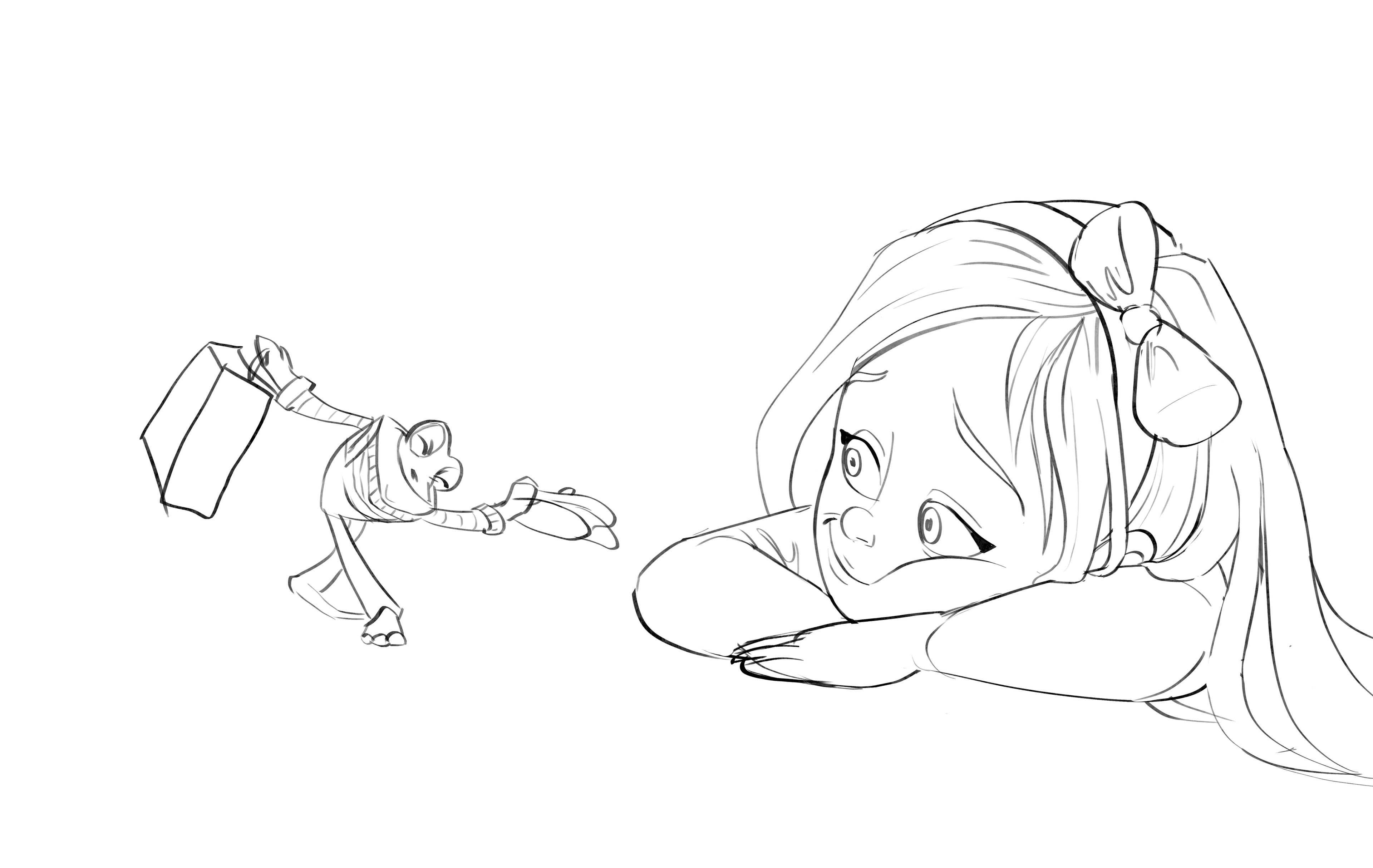
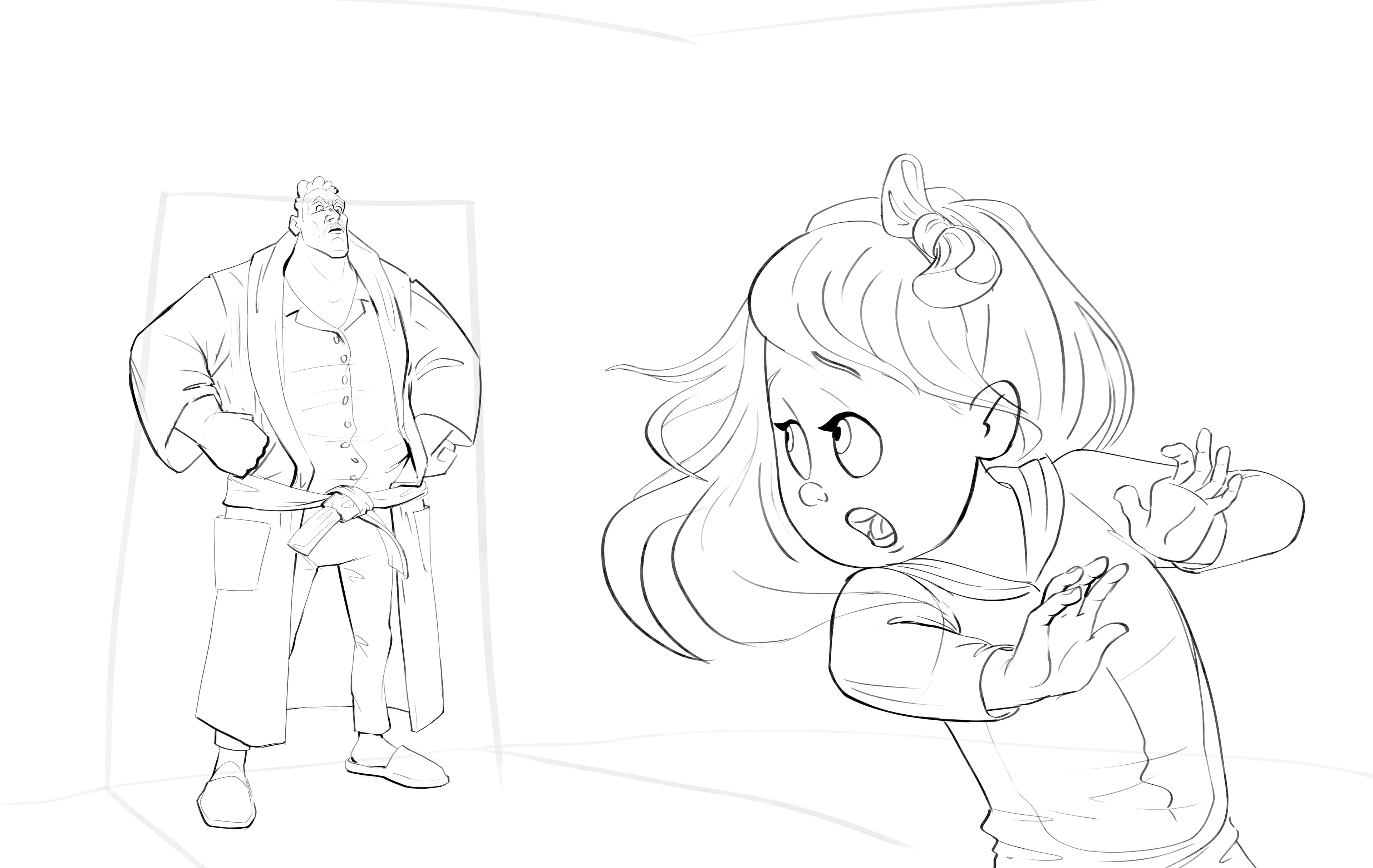
The first hello mattered. Lilly is not just meeting a frog. She is meeting wonder, kindness, and the possibility of being understood.
03
The story belongs to Lilly, Tog, and her father. It is about the feelings children carry, the feelings grown-ups carry, and the quiet work of listening to each other.
04
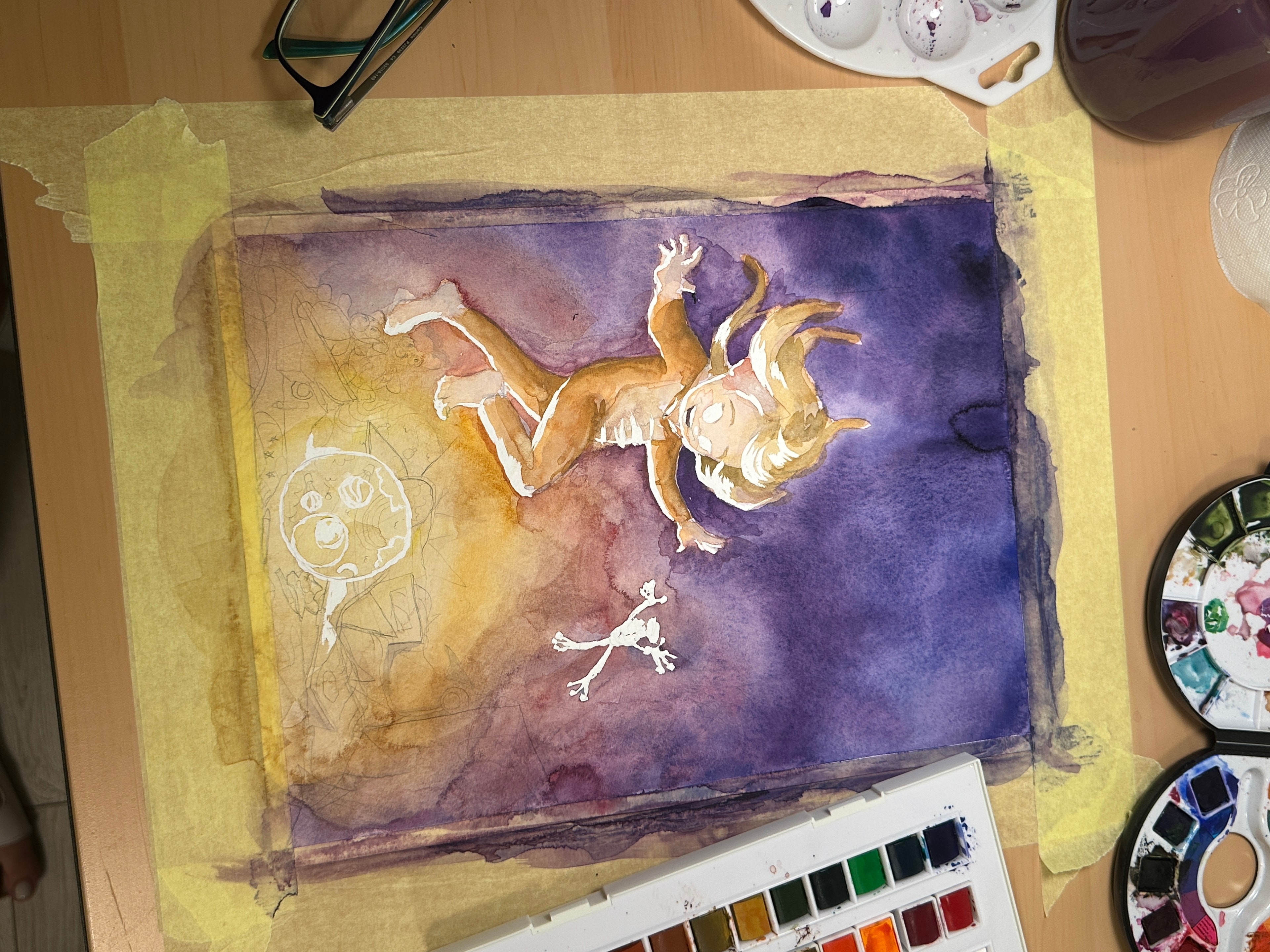
Once the feeling was found, the world could begin. Paper, paint, light, shadow, warm color, cool color — all of it helped the pond become a place you can feel.
Tog’s world was illustrated by Kristina Denadic, whose character design, color, and care helped bring the journals of Thaddeus Oliver Green onto the page.
Her work gave Tog his posture, his kindness, his tiny suitcase, and the feeling that he is someone you can meet.
Kristina Denadic is an illustrator specializing in children’s books. She began in theater as a costume design student, where her love of storytelling and drawing first took shape. She holds a BA in Costume Design and Fine Arts from the University of Arts in Belgrade and has worked across publishing, film, animation, and games.
She treats each book like a tiny theater stage, creating expressive, layered scenes with humor, tension, dreaminess, and cinematic care.

Stories from the journals of Thaddeus Oliver Green.
Illustrated by Kristina Denadic.